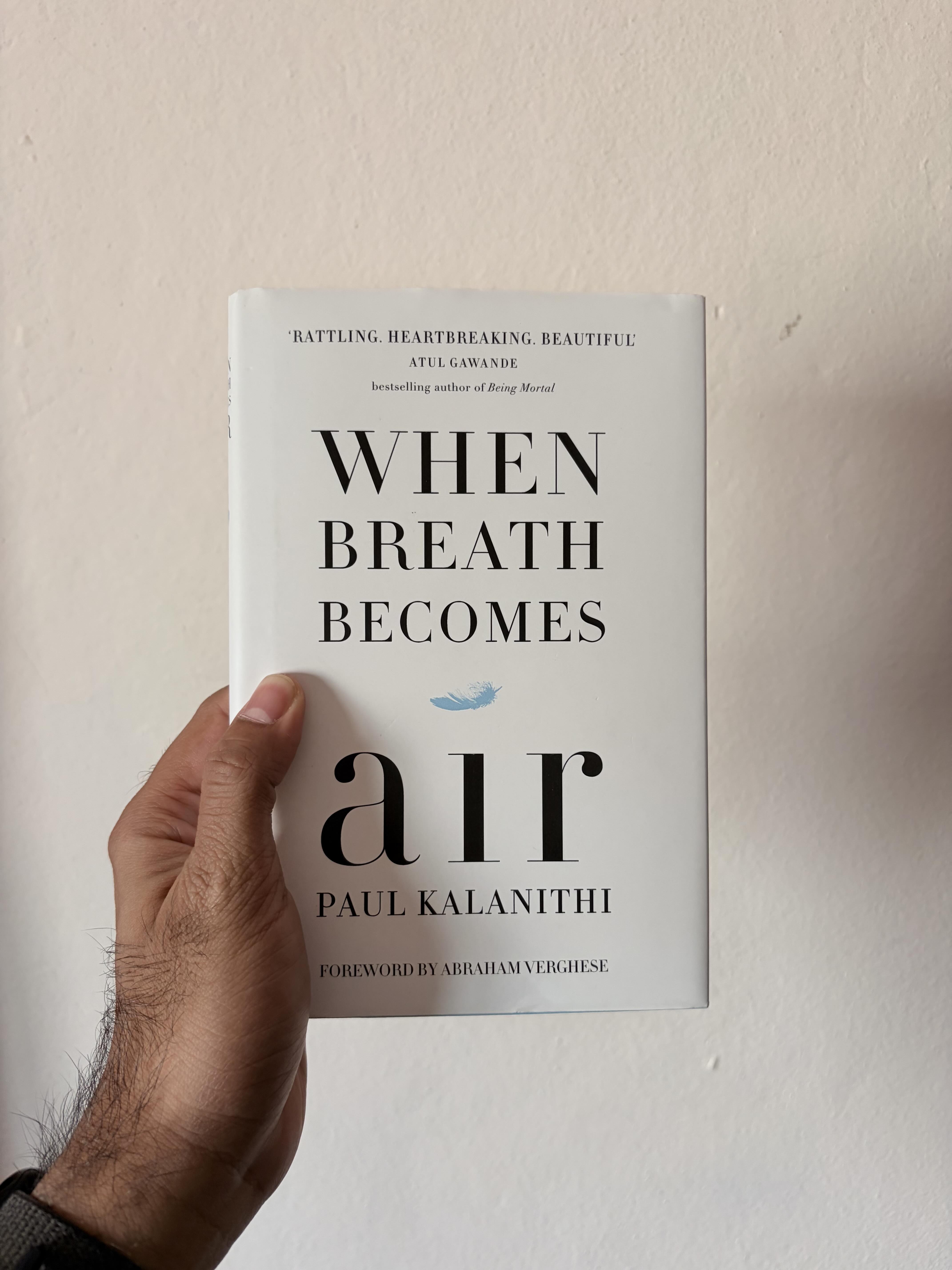
The book starts with the author, Paul, getting diagnosed with stage 4 cancer. I should start with the fact that I’m frightened of the disease. It is one thing that I wish I wasn’t even aware of. I wish I could invoke “Ignorance is bliss” on matters of cancer. But unfortunately I know about it. I have read a brief introducton to what cancerous cells are and what they can do in Immune by Philipp Dettmer. And I made some sense of it’s history through The Emperor of All Maladies by Siddhartha Mukherjee. I know how stealthily the disease can grow within someone and I know how deadly it can become. I can understand the strength that is needed to fight such a horrible disease. This knowledge drove my empathy towards Paul a bit deeper than I expected. I wish we, humans, come up with a cure for it sooner.
At the beginning of the book, you will notice that Paul already has accepted his fate. He even mentions this at a later point in the book that the general lifecycle of trauma did not apply in his case. He started with acceptance. The narration guides you through what Paul went through through multiple stages of his life after the diagnosis. His writing clearly conveys the amount of determination he was carrying to face whatever wass coming his way.
Amongst many things, the book also serves as Paul’s legacy that he leaves behind to his daughter. There is a message in the book for his daughter at the end on how she should not discount her role in his life. Although being just 8 months old, the joy it gave him is enormous.
Last but not the least, Paul’s wife, Lucy, is a hero. She deserves all the appreciation in the world for standing strong with Paul and his decision to bring a baby into the world knowing that he won’t be around for long. The epiloge of the book is essentially her narrating Paul’s last moments were and how she was witness to the battle that her husband was fighting. The epilogue will shake you.
Overall, the book is an experience. Althought it’s not something that anyone, including myself, should go through in person. The experience helps in building our ability to empathise with someone who is going through a similar but hopefully less daunting pain.